
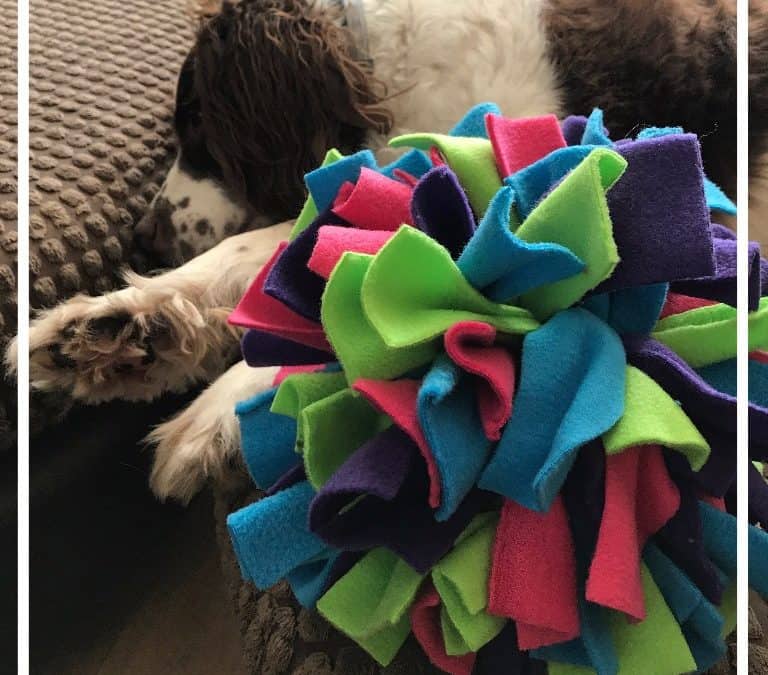
Snuffle mats are great, until your dog decides they’re actually a frisbee. That’s what happened with Breckin, my elderly Springer spaniel, who thought flinging his snuffle mat around was just part of the game.
The problem? He had spondylosis. The goal was calm enrichment, not enthusiastic backflips.
So I started experimenting. Enter: the DIY snuffle ball. Light enough for him to toss safely, engaging enough to keep his spaniel nose busy, and easy to make using a Holee Roller ball and some fleece. Win-win.
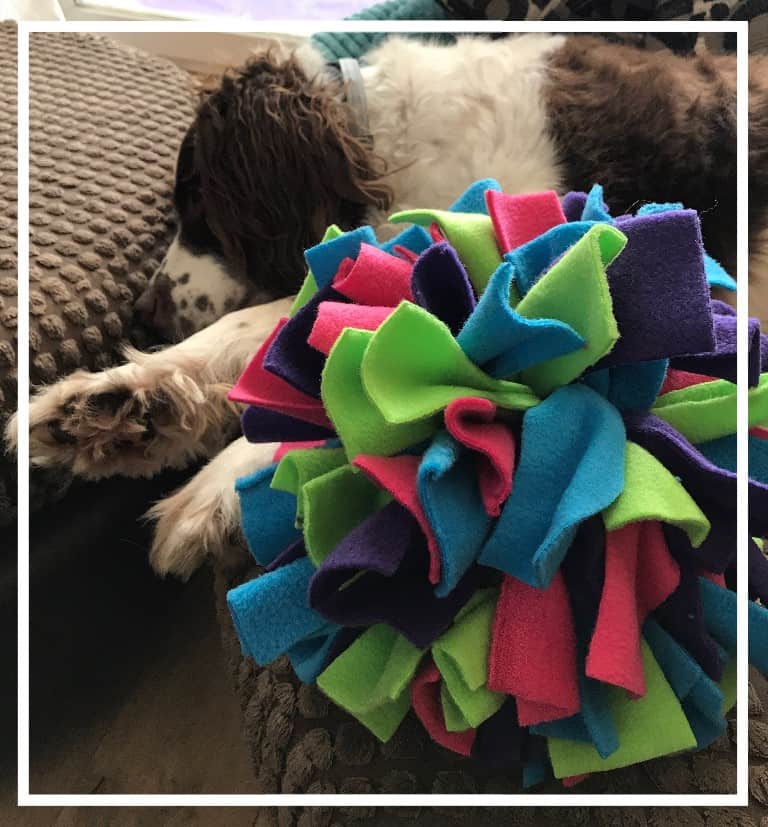
It was a hit! He loves it. Although in this photo he doesn’t seem that impressed I admit.
Why Use a Snuffle Ball?
Not every dog wants to chew on hard plastic and chasing a tennis ball for hours isn’t always a good idea either. But most dogs enjoy a good sniff. In fact, I’m yet to find one who doesn’t enjoy some level of sniffing.
A snuffle ball taps into that natural foraging behaviour, offering mental stimulation and encouraging calm focus—especially useful for dogs who tend to go zero to chaos in under five seconds. (Looking at you, Fraggle.)
Plus, it’s quieter than the hard plastic puzzle toys. And your furniture will thank you.
Who Will Benefit Most from a DIY Snuffle Ball?
This simple DIY toy might surprise you with how versatile it is. It isn’t just a “bored dog” fix (though it does help with that too). Snuffle balls are particularly brilliant for:
- Senior dogs who need gentle enrichment without too much physical exertion
- Anxious or reactive dogs who struggle with busy environments and need calm activities
- Dogs on restricted exercise (post-op, injury recovery, etc.) as long as they are mobile enough to move the ball around.
- Young dogs with more energy than sense
- Dogs who turn snuffle mats into an extreme sport
- All dogs who enjoy sniffing and foraging. A different kind of sniffing activity for novelty
But….every dog is an individual and sometimes what you think will work, doesn’t. You need to do your own trial and evaluation on whether a snuffleball does what you want for your dog.
How to Make a DIY Snuffle Ball for Your Dog
It’s surprisingly simple to make—here’s what you need.
- Grab a Holee Roller Ball.
That’s one of those rubber lattice balls—usually sold as dog toys or baby toys. They’re flexible, easy to grip, and perfect for stuffing. - Cut your fleece strips.
I used fleece, but any soft, non-fraying fabric works.
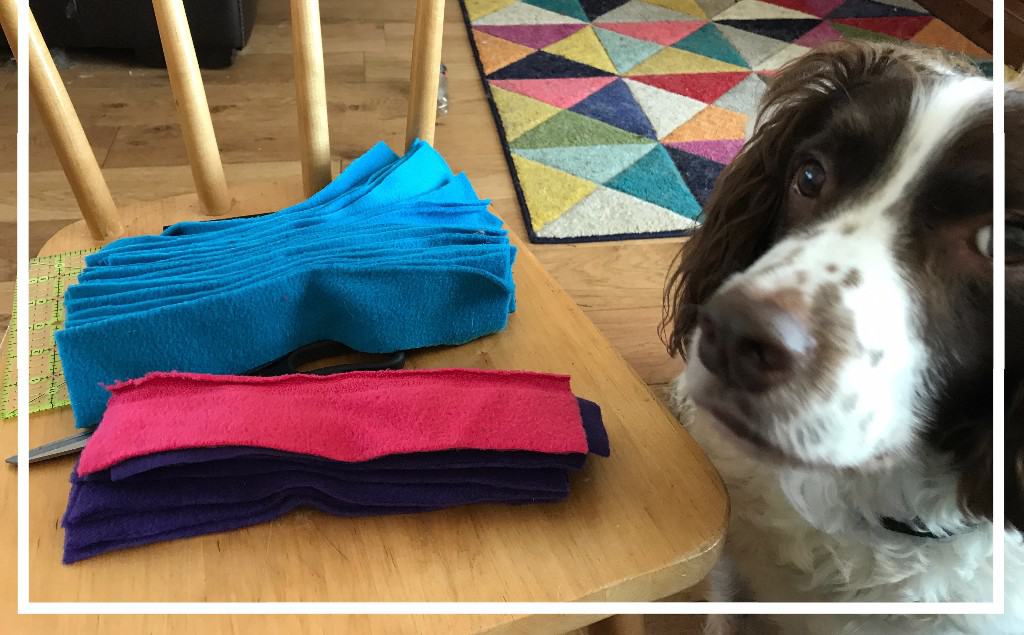
Cut into strips about 2 inches wide by 9–10 inches long (5cm x 24cm). You’ll need a lot.
- Tie the fleece to the ball.
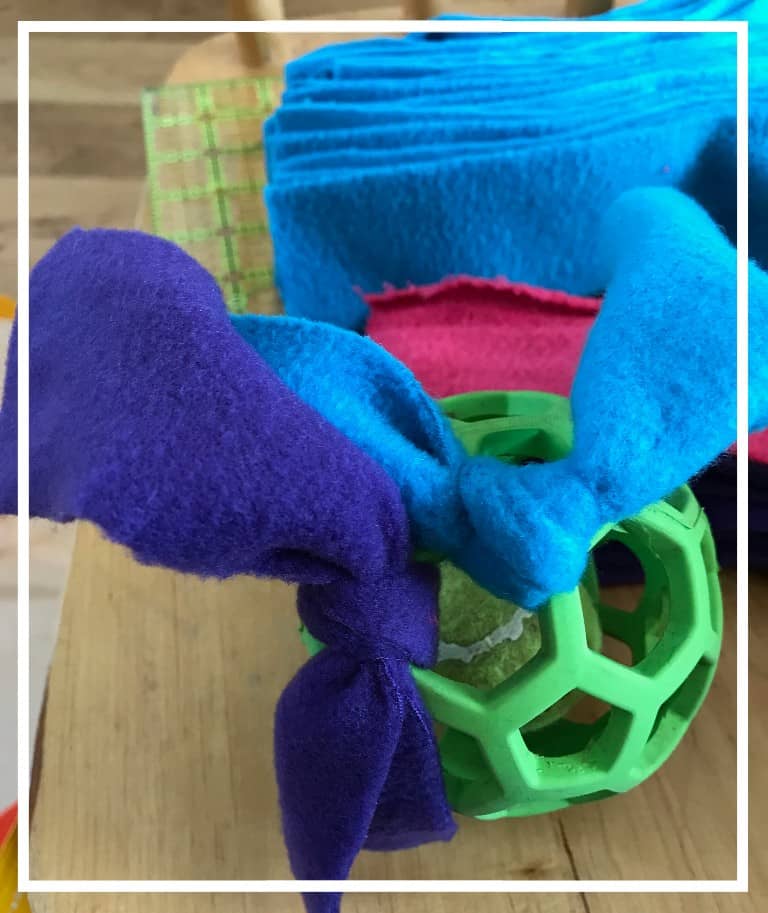
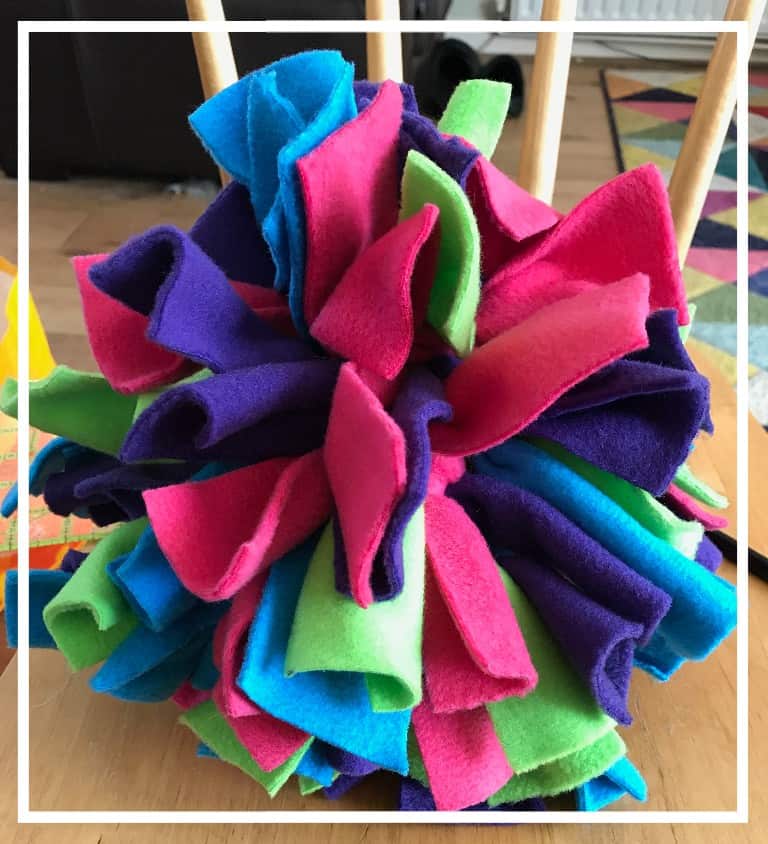
Just a single overhand knot around each bar of the ball. Aim for full coverage. (Hexagons get 6 strips, pentagons get 5). I’ll admit as the ball became more covered I’m pretty sure the occasional edge got missed but as long as you’ve got good coverage it won’t matter.
- Stuff in your dog’s favourite treats or kibble.
Push them through the gaps between fleece strips. The hexagon holes are best for this. - Let the chaos commence.
Bonus tip:
The more eagle eyed of you may have noticed that the holee ball I used had a mini tennis ball inside – that’s just because I grabbed one of our training balls to use, but I found it added some weight to the whole thing and allowed Breckin to roll it easily. It also probably prevented the really small kibble from just falling out in clumps too.
Common Mistakes to Avoid
A few things I learned the slightly frustrating way:
- Too-small treats fall out too easily. Bigger pieces = more challenge. But not too big or they won’t fall out at all. Goldilocks it is.
- Loose knots = flying fleece. Tighten those suckers down.
- Don’t leave it unattended with a chewer. Fleece isn’t a snack. (Apparently it is, but it shouldn’t be.)
Always supervise the first few sessions and tweak things as needed—every dog is different.
Want More DIY Dog Enrichment Ideas?
This is just one of many low-effort, high-reward enrichment activities I use with my own dogs and my clients’. If you found this useful, you’ll love my other blogs:
And for more practical tips and stories of real dogs doing real-life things (no airbrushed perfection required) you can sign up for my weekly newsletter. Join Behaviour in Bloom and get fresh ideas straight to your inbox: